
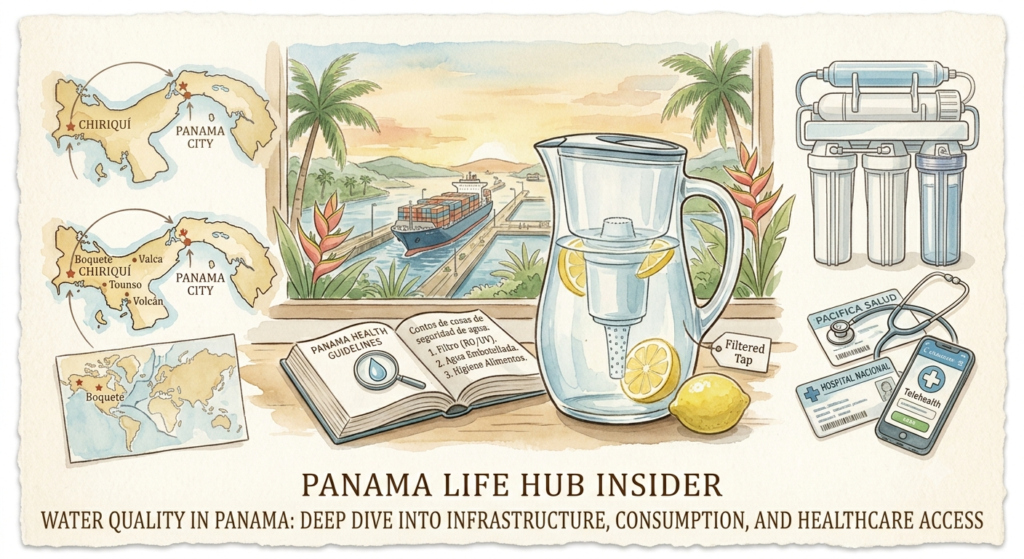
When relocating to a tropical climate, maintaining optimal physical health and wellness is the absolute foundation of a high-quality lifestyle. While Panama City boasts some of the most advanced healthcare facilities in Latin America and a highly sophisticated water treatment infrastructure, the recent gastrointestinal outbreak in Chiriquí serves as a critical reminder for the international community. Seasonal rainy periods, localized infrastructure gaps outside the capital, and changing environmental variables mean that managing water quality in Panama and controlling what your household consumes requires a proactive strategy.
1. Upgrading Your Home Water Security
While municipal water authorities like IDAAN consistently verify that major treatment plants meet high sanitary standards, the path from the facility to your kitchen tap can introduce unpredictable variables. Heavy tropical downpours can stress older distribution networks, cause temporary pressure drops, or lead to sediment runoff in secondary pipelines, affecting the baseline water quality in Panama, depending on your specific neighborhood.
To ensure absolute safety, relying on basic countertop pitcher filters is rarely enough. Expats should consider upgrading their home water setup based on their specific residential arrangements:
- Multi-Stage Carbon Block Systems: Excellent for high-rise luxury condos in Panama City neighborhoods like Punta Pacifica or San Francisco. They effectively remove residual chlorine, sediment, and heavy metals while dramatically improving taste.
- Reverse Osmosis (RO) Systems: The gold standard for under-sink installation, especially if you live in peri-urban areas or standalone suburban homes. RO systems actively strip out microscopic contaminants, dissolved solids, and chemical residues.
- Ultraviolet (UV) Purifiers: Essential if your property relies on a private well or a localized storage tank (tanque de reserva). UV light neutralizes 99.9% of bacteria, viruses, and parasites without altering the water’s taste or chemical balance.
2. Managing Wellness Risks and Water Quality in Panama’s Interior
Panama’s interior—including popular highland havens like Boquete and beach communities along the Pacific Riviera—offers an incredible lifestyle. However, regional utility infrastructure varies wildly compared to the capital. During the peak of the rainy season, sudden localized outbreaks of stomach bugs can occur due to agricultural runoff or temporary filtration challenges in small-scale rural aqueducts.
To enjoy local gastronomy and protect your health while traveling, adopt these practical lifestyle habits:
- The Ice and Water Check: In upscale or established expat venues, ice and table water are almost always sourced from commercial purified bags. In smaller, more rural roadside stops (fondas), it is always safer to request bottled water (agua embotellada) and strictly avoid loose ice.
- Raw vs. Cooked Food Protocols: High temperatures and tropical humidity mean food spoils rapidly if not properly chilled. Opt for piping hot, freshly cooked regional dishes. Ensure you wash fresh fruits and vegetables bought at local markets with filtered water before consumption.
- Travel Wellness Kit: Always keep a basic rehydration and digestive care kit at home or in your vehicle. Keeping electrolytes and standard over-the-counter stomach treatments on hand can resolve minor issues before they escalate into medical emergencies.
3. Navigating Panama’s Private Healthcare System Swiftly
If you or a family member does experience an acute gastrointestinal issue or any sudden illness, knowing exactly how to interface with the local private medical network will save you hours of administrative friction.
Panama City features world-class private hospitals, such as Pacifica Salud (affiliated with Johns Hopkins Medicine International), Hospital Nacional, and Hospiten Paitilla. Here is how to navigate them smoothly:
- Bypassing the Emergency Room Wait: For urgent but non-life-threatening issues (like severe dehydration or food poisoning), skip the general hospital emergency room queue by visiting the integrated Urgencias (Urgent Care) clinics or booking a same-day telehealth consultation via local medical platforms.
- The Specialist Model: Unlike many Western systems, you do not need a referral from a general practitioner to see a specialist in Panama. You can book an appointment directly with a Gastroenterologist or Internist. Standard specialist consultation fees range from $50 to $130 out-of-pocket if paid directly.
- Insurance Coordination: Always carry your private insurance card (whether local, like Blue Cross, Mapfre, or ASSA, or international with global coverage). While major hospitals coordinate direct billing for admissions, minor outpatient procedures or consultations often require you to pay upfront and file a reimbursement claim later. Keep all itemized invoices (facturas fiscales) and signed medical reports.
The Bottom Line
Living well and maintaining a high-yield lifestyle means playing smart defense with your health. By directly auditing the water quality in Panama at your residential tap and staying vigilant when exploring the interior, you can fully enjoy the vibrant, tropical lifestyle this beautiful country offers without unexpected interruptions.