
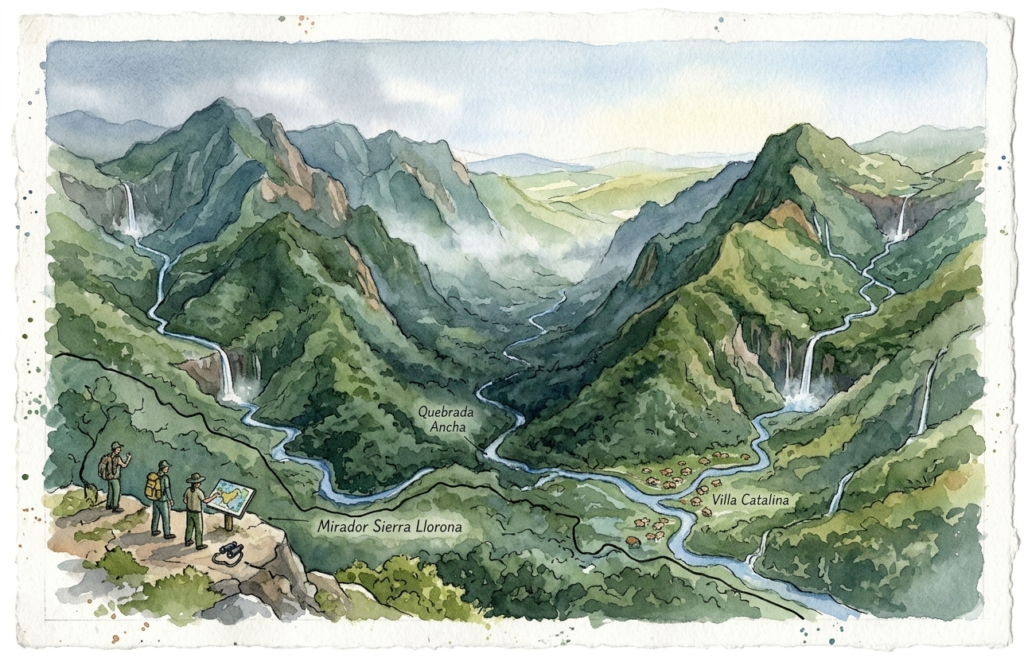
When people talk about Panama, they usually jump straight to the canal, banking, or real estate. But there’s another side of the country that matters just as much for anyone who lives here, visits here, or is simply trying to understand what makes Panama special: protected nature. Sierra Llorona National Park is a good reminder that some of the country’s most valuable assets are not commercial at all. They are ecological, scenic, and deeply tied to how the land breathes, stores water, and supports wildlife.
This is not the kind of place you talk about in terms of nightlife or easy tourist shortcuts. It is the kind of place that rewards patience, respect, and a proper love for the outdoors. For expatriates, travelers, and local nature lovers, the park opens a new chapter in Panama’s conservation story, and the best way to approach it is with a hiking mindset, not a development mindset.
Why Sierra Llorona matters
The creation of Sierra Llorona National Park reflects a simple but important idea: some landscapes are too ecologically valuable to leave exposed to constant pressure. Protected areas help preserve biodiversity, maintain forest cover, protect watersheds, and keep wildlife corridors intact. In a country like Panama, where nature and human activity often sit very close to each other, that kind of protection is not a luxury. It is a necessity.
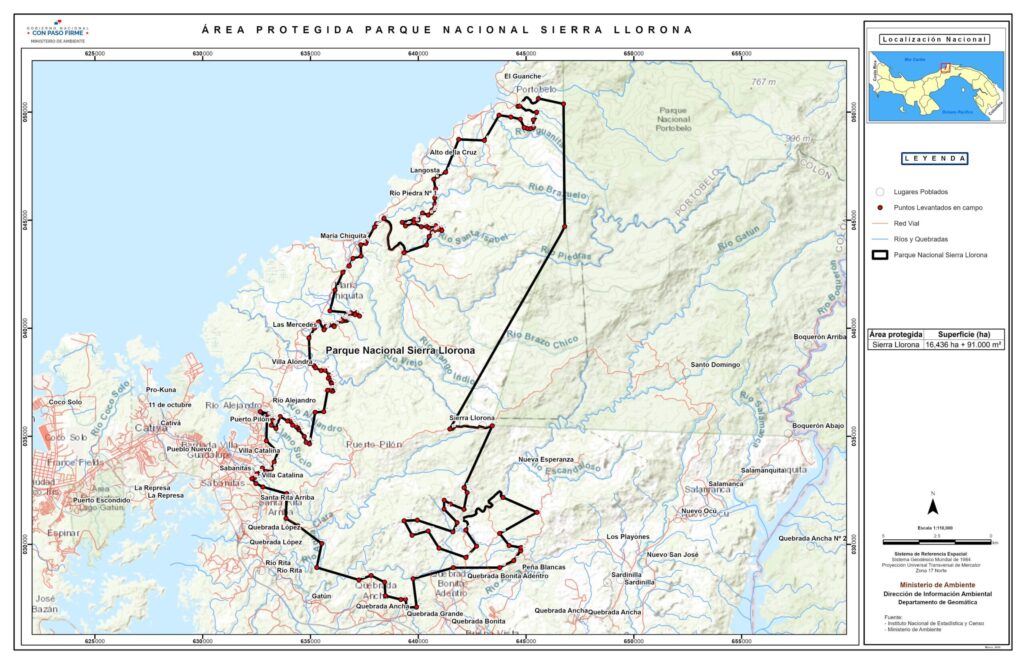
Sierra Llorona is especially relevant because it strengthens the ecological network in the province of Colón. That means the park is not just an isolated patch of green on a map. It is part of a larger conservation structure that helps connect habitats, reduce fragmentation, and protect species that depend on continuous forest. For visitors, that translates into a more authentic natural experience and a better chance of encountering a healthy forest environment.
What visitors should expect
This is not a theme park, and it should not be treated like one. The appeal of Sierra Llorona National Park is its natural character, which means hiking, birdwatching, photography, and guided exploration are the main kinds of activities that make sense here. The experience should feel quiet, local, and low-impact.
Visitors should expect conditions that reward preparation. Trails may be basic or in development, weather can change quickly, and access may depend on local arrangements, park rules, or guide availability. That is not a weakness. It is part of what keeps places like this from being overwhelmed.
The most useful way to think about a visit is this: you are entering an active conservation landscape, not just a sightseeing stop. That mindset changes everything. It means bringing the right shoes, respecting trail conditions, avoiding litter, and understanding that the forest is the main attraction.
If you want to visit Sierra Llorona National Park, the best approach is to plan and keep your expectations rooted in conservation travel, not mass tourism. Check local access conditions before you go, confirm whether a guide is required, and make sure you understand the park rules and any permit process that may apply. Bring proper hiking shoes, water, rain protection, and enough time to move at a slow pace, because this is the kind of place that rewards patience more than speed. The idea is to experience the forest responsibly, leave no trace, and treat the park as a protected ecosystem first and a travel destination second.
Best activities in the park
The strongest experiences in a place like this usually come from simple outdoor activities done well.
- Hiking. This is the most obvious fit. Even a moderate trail can become a memorable experience if the forest is healthy and the route is well guided.
- Birdwatching. Panama is already a dream destination for birders, and a new protected area only adds more value for anyone who enjoys early mornings and a pair of binoculars.
- Nature photography. The combination of forest textures, light, humidity, and wildlife makes this kind of park ideal for photographers who like natural scenes more than staged ones.
- Environmental learning. For visitors who want more than a walk, the park can become a place to understand conservation in action.
- Guided exploration. A local guide can turn a simple walk into a much richer experience by helping identify plants, birds, tracks, and ecological details.
If you are the type of traveler who likes big resorts and polished attractions, this may not be your style. But if you enjoy real landscapes and the feeling of being somewhere that still belongs to nature, Sierra Llorona makes a strong case.
Suggested itineraries
Because Sierra Llorona is a protected area and likely best approached through careful planning, it makes sense to think in terms of simple itineraries rather than overbuilt tourism packages.
Half-day nature visit
- This works well for travelers based in Colón or nearby areas who want a short outdoor experience without turning the day into a logistics project. The idea is to arrive early, hike with a guide if required, spend time observing the forest, and leave before fatigue or weather becomes a problem.
- A good half-day visit might include a short trail walk, a birding stop, and time for photography or interpretation. This is the easiest option for expats who want to understand the park without committing to a full weekend.
Full-day hiking plan
- If you have more time, a full-day itinerary gives you a much better feel for the landscape. Start early, carry water and snacks, and plan around the cooler hours of the day. That kind of schedule allows for a slower pace, which is important in tropical forest environments where the heat and humidity can wear you down faster than you expect.
- A full-day visit can include a longer walk, a pause for lunch, and time to explore more than one section of the area if the access rules allow it. It is also the best option for visitors who want to combine hiking with photography or wildlife observation.
Weekend eco-visit
- For people who want to turn the visit into a broader nature trip, a weekend makes more sense than trying to rush everything in one day. In that case, the best strategy is to stay in a nearby town or a simple base outside the park, then dedicate one day to the main hike and the other to a slower, more reflective experience.
- That second day could be used for birdwatching at dawn, a return to a different trail section, or a visit to nearby conservation areas if they are part of the same travel plan. The key is not to pack the weekend too tightly. Good eco-tourism is supposed to leave room for observation, not just movement.
Responsible visiting
This is where the article needs to be very clear. The best thing about a national park is not how many people it can attract. It is how well it can protect what makes it special. So if you are going to visit Sierra Llorona, the right attitude is one of restraint.
Stay on trails, avoid disturbing wildlife, carry out all trash, and do not assume that every scenic spot is meant for camping, loud gatherings, or unplanned exploration. In protected areas, human presence should be managed, not casual. That is especially true in a new park where the conservation value is high, and the long-term management framework matters.
For expatriates in particular, this is a useful adjustment in perspective. Panama does not need more people trying to “discover” nature by changing it. It needs visitors who understand that the best way to enjoy a forest is to leave it as intact as possible.
Final thoughts
Sierra Llorona National Park deserves to be talked about for what it really is: a conservation milestone and a place for low-impact nature experiences. That makes it valuable in a way that is both simple and important. Not every place has to become a destination full of crowds, shops, and shortcuts to matter.
For anyone in Panama who likes hiking, forest air, and the feeling of visiting a place before it gets overexposed, Sierra Llorona is worth paying attention to. The right way to approach it is with respect, preparation, and patience. In a country like this, those are usually the visitors who end up having the best experience.