
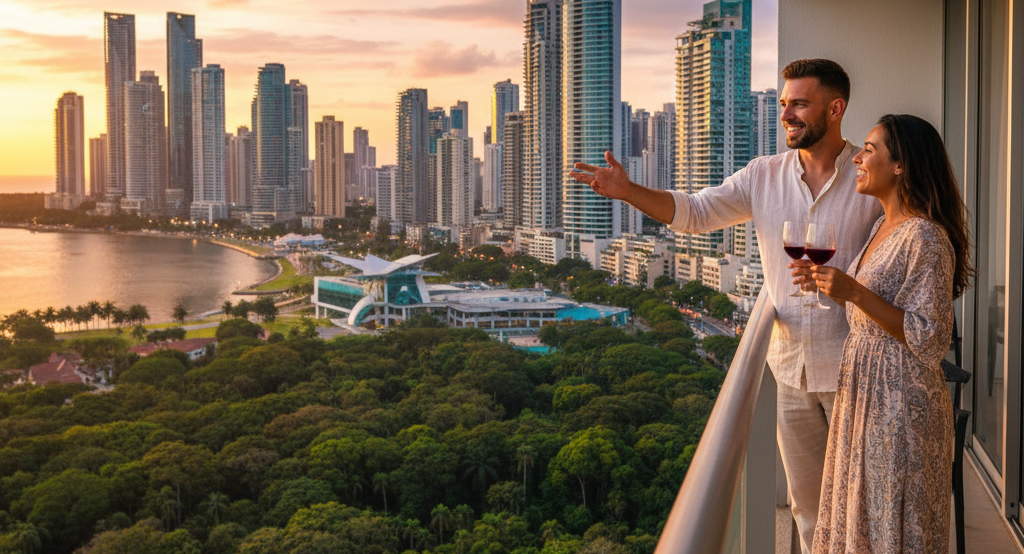
For many expats, Panama City is the ultimate blend of Latin American charm and modern convenience. It’s a vibrant capital with skyscrapers, shopping malls, international schools, world-class healthcare, and a thriving expat community. Yet, it also comes with challenges such as traffic, higher costs compared to the interior, and the tropical climate. This guide gathers real expat insights to help you decide if Panama City is the right place for you.
Best Neighborhoods for Expats in Panama City
El Cangrejo & Bella Vista
Known as the most walkable and social areas of the city, these neighborhoods are full of restaurants, cafés, and nightlife. Expats describe them as the best place to start if you want an active lifestyle without relying on a car.
San Francisco
A more residential and family-friendly area, San Francisco offers high-end supermarkets, shopping malls, and access to Omar Park. Expats see it as a great balance between convenience and calm.
Casco Viejo
This historic district is beloved for its colonial architecture, art galleries, and vibrant cultural scene. However, expats warn that it can be noisy and touristy. Apartments are charming but often smaller.
Punta Pacífica & Costa del Este
These upscale districts are modern, full of luxury condos, and close to international schools and hospitals. They are popular with wealthier expats and families who want modern living with ocean views.
Cost of Living in Panama City
Compared to the interior of Panama, life in the capital is significantly more expensive.
- Monthly budget for a couple: $3,000 – $5,000 for a middle-to-upper lifestyle.
- Rent: Luxury condos in central areas can reach $1,500 – $2,500+, while smaller apartments in less central districts are $800 – $1,200.
- Utilities: Electricity is a major hidden cost, with bills often exceeding $200–$300 per month due to constant air conditioning.
- Groceries: Local products are affordable, but imported items can be as expensive—or more—than in the U.S.
- Transportation: Many expats save money by avoiding car ownership and instead relying on Uber, taxis, or the metro system.
👉 In contrast, couples living in Boquete, Coronado, or Las Tablas report spending between $2,000 and $3,000 per month.
Cost of Living: Panama City vs. The Interior
One of the biggest decisions expats face is whether to live in the bustling capital or in Panama’s quieter towns and coastal areas. The cost difference is significant, and understanding it can help you plan your budget more realistically.
| Expense | Panama City (Monthly) | Interior Towns (Boquete, Coronado, Las Tablas) |
|---|---|---|
| Rent (2-bedroom apartment) | $1,200 – $2,500 | $700 – $1,200 |
| Utilities (electricity, AC use) | $200 – $300 | $100 – $150 |
| Groceries | $500 – $800 | $400 – $600 |
| Dining Out (mid-range) | $15 – $30 per meal | $8 – $15 per meal |
| Transportation (Uber) | $100 – $200 | $50 – $100 |
| Health Insurance | $150 – $300 | $120 – $200 |
| Entertainment & Leisure | $200 – $400 | $100 – $200 |
👉 Summary: Expats report that a couple can live comfortably in Panama City with $3,000–$5,000/month, while in the interior, the same lifestyle costs about $2,000–$3,000/month. The main difference comes from rent, dining, and utilities—urban comfort has its price.
Traffic and Transportation
Traffic is one of the most common complaints from expats in Panama City.
- Reality check: The traffic can be chaotic and heavy, especially during rush hours. In Panama City, there are few parking spaces at businesses.
- Expat strategy: Many decide against owning a car. Instead, they rely on Uber, taxis, or the metro, which is clean, efficient, and affordable.
- Pro tip: One expat summed it up perfectly: “The cost of not stressing about traffic is worth more than the cost of a car.”
Lifestyle and Expat Community
- Climate: Panama City has year-round heat and humidity. Many expats adjust by spending more time indoors with air conditioning during the rainy season and being more active outdoors in the dry season.
- Expat community: The capital has one of the largest and most diverse expat populations in Latin America. It’s easy to meet people through Facebook groups, professional networking, or cultural events.
- Lifestyle perks: Restaurants range from local street food to Michelin-level fine dining, while malls offer international brands and entertainment. Tocumen International Airport provides quick connections to the U.S. and beyond.
Pros and Cons of Living in Panama City
Pros:
- Access to modern healthcare, international schools, and global cuisine.
- A lively cultural scene with theaters, concerts, and festivals.
- Tocumen International Airport connects residents to destinations worldwide.
Cons:
- Higher cost of living compared to the countryside.
- Constant humidity. Noise, traffic, and crowded streets are part of daily life.
- Imported goods are expensive, pushing many to adapt to local products.
What Expats Really Say About Living in Panama
For many expats, life in Panama City is a journey of two halves: adjustment and adaptation.
The Cultural Adjustment
The relaxed “Panamanian pace” can be frustrating at first. Bureaucracy and slower processes often surprise newcomers. Expats say patience is a must, especially with paperwork and daily errands.
Community and Social Life
The warmth of Panamanians stands out. Expats often mention how welcoming locals are, making integration easier. Social life is active and supportive, with events, expat clubs, and international meetups.
Challenges and Rewards
- Challenges: Traffic, bureaucracy, and the high price of imported goods.
- Rewards: Affordable healthcare, high-quality local food, beautiful beaches and mountains nearby, and a lifestyle less stressful than in the U.S. or Europe.
👉 As one expat summarized: “It’s not just a change of country—it’s a change in how you see life.”
Testimonials from Expats
“Panama City is alive and exciting. I love the energy here, especially in El Cangrejo, where I can walk everywhere. But I had to get used to the traffic—now I use Uber for everything, and it’s stress-free.”
“Casco Viejo is beautiful, and I love the history, but the noise from nightlife and tourists can be overwhelming at times. Still, it’s worth it for the charm.”
“We spend around $4,000 a month as a couple in Punta Pacífica. It’s not cheap, but the convenience of living close to hospitals, malls, and the airport is worth it.”
Conclusion: Is Panama City Right for You?
Living in Panama City is ideal for those who want a cosmopolitan lifestyle with all the conveniences of a major city. It’s vibrant, diverse, and offers opportunities for social life, healthcare, and international travel. However, if peace and lower costs are your priority, you might be better suited to smaller towns in the interior.
FAQ
What is it like living in Panama City, Panama?
Life in Panama City is modern and cosmopolitan, with plenty of conveniences and activities, but also higher costs, heavy traffic, and tropical humidity.
What are the best neighborhoods for expats in Panama City?
Top neighborhoods include El Cangrejo, Bella Vista, San Francisco, Casco Viejo, Punta Pacífica, and Costa del Este.
Is Panama City safe for expats?
Yes, expats report feeling safe in popular neighborhoods, though general big-city precautions are always advised.
How much does it cost to live in Panama City, Panama?
A couple typically spends between $3,000 and $5,000 per month, depending on neighborhood and lifestyle.
Do most people speak English?
In expat-friendly areas and private services, yes. However, learning some Spanish greatly improves daily life.
Is healthcare good in Panama City?
Yes, private healthcare is high quality, with hospitals like Punta Pacífica and Paitilla being top choices for expats.