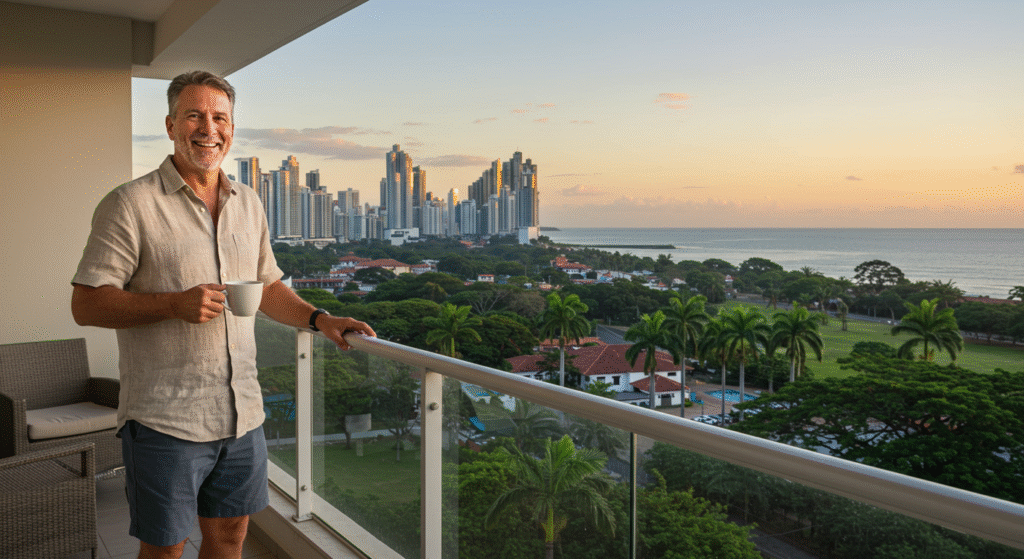
Living abroad always comes with surprises, but for many Americans, Panama has proven to be one of the most rewarding destinations. Between the familiar use of the U.S. dollar, affordable healthcare, and a thriving expat community, Panama has become a top choice for retirees and digital nomads alike.
In this article, we explore what Americans say about their life in Panama—the good, the challenging, and the practical advice they share with newcomers.
The Biggest Benefits for Americans in Panama
Financial Relief Factor
Many U.S. retirees highlight how far their savings go in Panama. Affordable healthcare, lower rent (outside Panama City), and cheaper services allow them to enjoy a middle-to-upper-class lifestyle at a fraction of the cost.
For most U.S. citizens who move to Panama, the biggest pro is financial freedom. Testimonials highlight the dramatic difference in daily expenses compared to the United States.
- Healthcare Savings: Expats consistently mention that paying $50–$75 for a specialist visit feels liberating compared to the hundreds of dollars they would spend back home. Even paying out-of-pocket is often cheaper than a U.S. insurance deductible.
- U.S. Dollar Advantage: Because Panama uses the U.S. dollar, Americans appreciate the convenience of avoiding currency exchange issues. This makes budgeting straightforward.
- Pensionado Visa: Retirees praise Panama’s pensionado program, which grants lifetime discounts on utilities, entertainment, and even airfare. Many call it one of the most generous retiree programs in the world.
Comfort and Lifestyle Balance
Despite frustrations, most U.S. expats find Panama an ideal balance between familiarity and cultural discovery.
- Climate Advantage: The tropical climate means outdoor living year-round. However, high humidity often translates into elevated electricity bills due to constant air conditioning.
- Urban Comfort: In Panama City, expats enjoy modern conveniences: skyscrapers, shopping malls, fine dining, and one of the best-connected airports in Latin America.
- Community Support: Many rely on the large expat community for social circles, advice, and support. Forums and Facebook groups help newcomers integrate faster.
The Biggest Challenges for Americans
The Patience Test: Culture Shock for Americans
While money matters feel easier, adapting to the Panamanian pace of life is the toughest challenge.
- Bureaucracy: Opening a bank account, processing visas, or signing contracts can be time-consuming and require multiple visits. One expat summed it up: “Things will get done, but on Panamanian time, not American time.”
- The “Panamanian Hour”: Beyond paperwork, cultural rhythms take adjusting. Appointments rarely start on time, and service delivery can feel slow compared to U.S. standards.
Climate and Electricity Costs
The tropical weather is appealing but comes with high humidity. Air conditioning can push electricity bills to $200–$300/month in Panama City.
Language Barrier
English is widely spoken in Panama City and tourist hubs, but outside urban areas, Spanish is the primary language. Many Americans eventually take classes to integrate better.
American Testimonials on Life in Panama
- “Paying $60 for a specialist visit here is still cheaper than my insurance copay back home.”
- “The hardest adjustment wasn’t the heat—it was slowing down my mindset. Everything works differently here.”
- “I love that I can live a comfortable lifestyle in the city, but escape to the beach or mountains in just a couple of hours.”
Pros and Cons of Americans Living in Panama
| Pros | Cons |
|---|---|
| U.S. dollar used | Bureaucratic delays |
| Affordable healthcare | High electricity bills |
| Pensionado discounts | Language barrier outside cities |
| Large U.S. expat community | Imported goods are expensive |
| Modern amenities in Panama City | Traffic congestion in the capital |
Daily Life Costs – How Much Does Your Money Stretch?
Expat testimonies consistently highlight that money goes further in Panama. Grocery bills, dining out, and personal services (like cleaners or gardeners) are significantly cheaper.
Table: Panama vs USA – Daily Living Costs (Average)
| Expense Category | Panama (USD) | USA (USD) | Expat Insight |
|---|---|---|---|
| Groceries (monthly) | $300–$450 | $600–$800 | “I save almost half on supermarket bills by switching to local products.” |
| Restaurant Meal | $8–$15 | $20–$40 | “Eating out is affordable enough to be a weekly habit, not a luxury.” |
| Taxi/Uber Ride | $3–$7 | $15–$25 | “I gave up owning a car—rideshares are cheaper than insurance + gas in the U.S.” |
| Utilities (electricity, internet) | $150–$250 | $250–$400 | “Air conditioning is costly, but still less than what I used to pay back home.” |
Healthcare Costs – A Game-Changer for Retirees
Healthcare is where expats feel the biggest difference.
- Specialist visit in Panama: $50–$75
- Emergency room visit: $100–$200
- U.S. comparison: $250–$400 for a specialist, thousands for ER without insurance
One retiree summed it up:
“Paying out-of-pocket here is still cheaper than my U.S. insurance deductible.”
For retirees, this financial relief is transformative, making Panama not just cheaper but far more secure for long-term living.
Housing and Utilities – City vs. Suburbs
Housing varies dramatically between Panama City and rural towns like Boquete or Coronado.
- Panama City (modern apartment, 2BR): $1,200–$2,000/month
- Boquete or Coronado: $800–$1,200/month
- U.S. comparison: $2,000–$3,500 in major metro areas
Electricity is the hidden expense many newcomers underestimate. Air conditioning during Panama’s hot season can push monthly bills to $200–$300, though cooler mountain towns may cut this cost in half.
Conclusion: A Trade-Off Worth Making
For Americans living in Panama, the move represents both freedom and challenge. The financial benefits and improved lifestyle quality outweigh the frustrations of bureaucracy and cultural differences—at least for those willing to embrace patience and flexibility.
As one U.S. retiree put it:
“Back home, I was always stressed about bills. Here, I can live well, afford healthcare, and enjoy life at a slower pace. It’s not perfect, but it’s worth it.”
FAQ Section
Is Panama safe for Americans to live in?
Yes. While Panama City has typical urban crime, expats report feeling safe in most neighborhoods, especially when practicing common-sense precautions.
Can Americans use Medicare in Panama?
No, traditional Medicare does not cover healthcare outside the U.S. Most expats keep it active for when they visit the U.S. and pair it with local or international health insurance in Panama.
Do Americans need to learn Spanish to live in Panama?
In Panama City, many professionals speak English, but Spanish is essential for integrating fully, especially outside the capital.
What’s the biggest cultural challenge for U.S. expats?
Adapting to slower processes and the concept of “Panamanian time.” Patience becomes a necessary skill.
Is Panama cheaper than the USA for expats?
Yes. Expats consistently report that Panama’s cost of living is significantly lower than in the U.S. Daily expenses like groceries, restaurants, transportation, and domestic help cost a fraction of U.S. prices.