
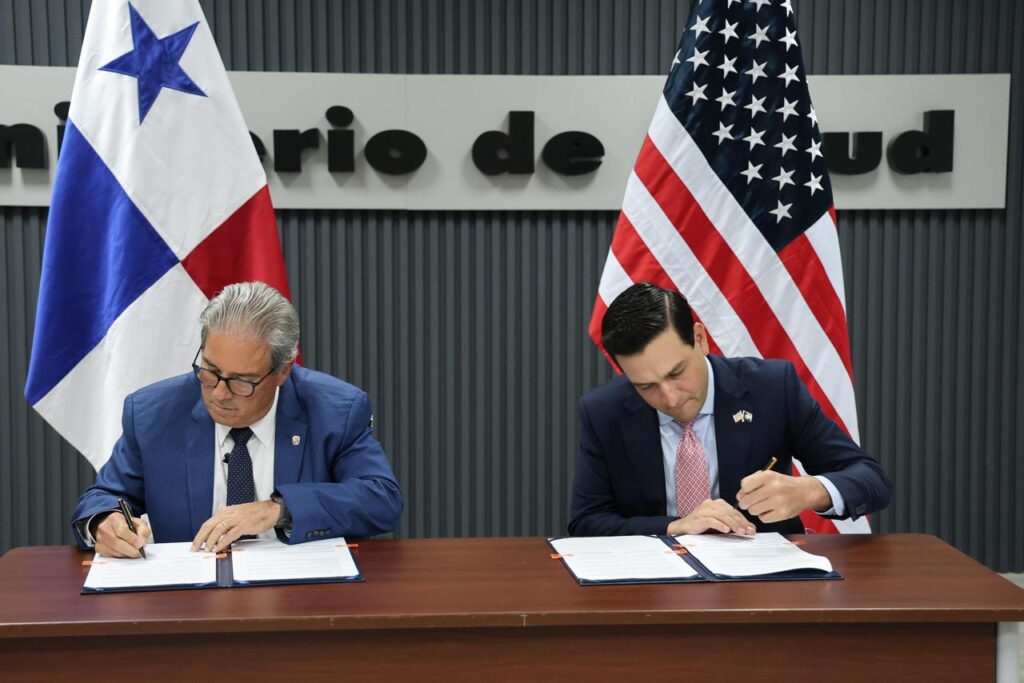
Panama is currently undergoing a structural modernization of its public health system through a strategic bilateral partnership with the United States. The $33.5 million Global Health Strategy Memorandum of Understanding (MOU), active through 2028, is not merely a financial grant; it is a technical blueprint designed to elevate the country’s medical infrastructure to international standards. This analysis explores the four technical pillars that are redefining the delivery of health services across the Isthmus.
1. The Fiscal Pivot: From Aid to National Ownership
A critical component of this strategy is the transition toward fiscal sustainability. The agreement utilizes a co-investment model that ensures the longevity of Panama’s health programs:
- Financial Breakdown: The U.S. has committed $22.5 million, matched by $11 million from the Panamanian government.
- Workforce Integration: A primary technical milestone is the absorption of specialized health personnel—previously supported by international cooperation—directly into the Ministry of Health (MINSA) payroll. This prevents the loss of clinical expertise and ensures that the national system maintains high-level operational capacity independently by 2028.
2. Digital Surveillance and Integrated Medical Records
The core of the modernization effort lies in the implementation of the National Integrated Surveillance and Outbreak Response System. This technical overhaul moves Panama away from fragmented, paper-based reporting:
- Electronic Medical Records (EMR): Frontline health workers nationwide are being equipped with digital tools to capture patient data at the point of care.
- System Interoperability: The new digital backbone allows for real-time data sharing between regional clinics and central laboratories. This integration is designed to reduce the time between initial pathogen detection and a coordinated national response to less than 24 hours.
3. Decentralization and Laboratory Modernization
To ensure equitable access to high-quality diagnostics, the MOU focuses on upgrading laboratory networks beyond the capital city:
- Standardization of Protocols: National laboratories are undergoing technical certification to align with international clinical standards. This ensures that diagnostic results generated anywhere in Panama have global technical validity.
- Regional Expansion: Significant resources are being directed to laboratories in the provinces of Chiriquí and Bocas del Toro. By enhancing local diagnostic power, the system reduces the logistical burden on the Instituto Gorgas in Panama City, significantly accelerating turnaround times for patients in regional areas.
4. Supply Chain Transparency and Logistics
Addressing pharmaceutical availability is a central pillar of the 2026-2028 strategy. The technical assistance focuses on Supply Chain Management (SCM) optimization:
- Predictive Analytics: The implementation of data-driven forecasting models to anticipate medicine demand and prevent stock-outs at the regional level.
- Transparency in Procurement: By modernizing the “last-mile” logistics of medical supplies, the program seeks to ensure that specialized treatments and diagnostic reagents are consistently available in all national health facilities.
5. The 7-1-7 Performance Standard
The technical success of this national strategy is measured against the 7-1-7 global benchmark for health security:
- 7 Days to detect a suspected health threat.
- 1 Day to notify public health authorities.
- 7 Days to initiate a definitive and effective response.
Conclusion: A Strengthened Health Foundation for Panama
The U.S.-Panama Global Health Strategy represents a significant leap forward in the country’s institutional capacity. By prioritizing digital records, laboratory decentralization, and fiscal ownership, Panama is building a more resilient and transparent healthcare infrastructure. For anyone living in or looking at Panama, this technical evolution signals a commitment to maintaining a robust, modern, and data-driven public health system that serves the entire population.
Source: pa.usembassy.gov/